I like to compare the time when you first start looking into
wool to the time you first start thinking about cloth diapering-there are SO
many types, and brands, and then people start talking in a foreign language,
asking you about things like “felting” and “interlock”-and all you know is that
you want the best value for your money, and you want something (preferably
something cute/beautiful) to keep your precious little one dry! So the purpose
of this post is to compare and contrast (in a very basic way-later posts can go
into more detail of each type of wool soaker if there is interest-let me know!)
the various types of wool so that you can make the right choice for your
family. I am going to summarize each type of wool, and then include (probably
at the bottom) a "quick and easy" reference chart. Please note that what I say in this blog post is based on my own experience, research, and discussions with my husband (grew up spinning and processing wool) and his mother (a fiber artist with her own studio who works primarily with wool for spinning, felting, knitting, dying, etc.)-I definitely welcome input and stories/experiences from others! And if there is anyone who makes a type of wool that they would like me to try out, review, etc. I welcome the opportunity to do that. Also, if anything is unclear, please feel free to contact me or just comment on the blog post!
Types of Wool
Interlock
Interlock wool is wool that has been machine knitted and has at least 2 layers (you can get it with more)-or in some cases, it has been woven on a loom (machine or hand). There are 2 types of interlock wool-one has a very small amount of spandex (or something similar) integrated into it and the other is 100% wool. The advantage of some spandex is that over time, it is less likely that the wool will lose its shape and it gives the wool a little more stretch/rebound versus the 100% wool. The disadvantage is that you have introduced another fiber type-so it might absorb a little less. Because interlock is almost always machine made, the stitches are VERY tiny and it is very absorptive. Items made from this type of wool usually look like "regular clothes" that you might buy at a store. A nice thing about interlock is that usually items made with interlock can have multiple thin layers (sometimes throughout the whole thing, sometimes just sewn into the "diaper zone"), so some people feel they are more absorptive. The downside-interlock is VERY expensive (even if you buy it yourself and then sew your items yourself)-sometimes up to $30/yard!!! It does last pretty well, and holds its resale value well. Like any machine made item, it is a little less delicate, but it will still felt if not cared for according to instructions!
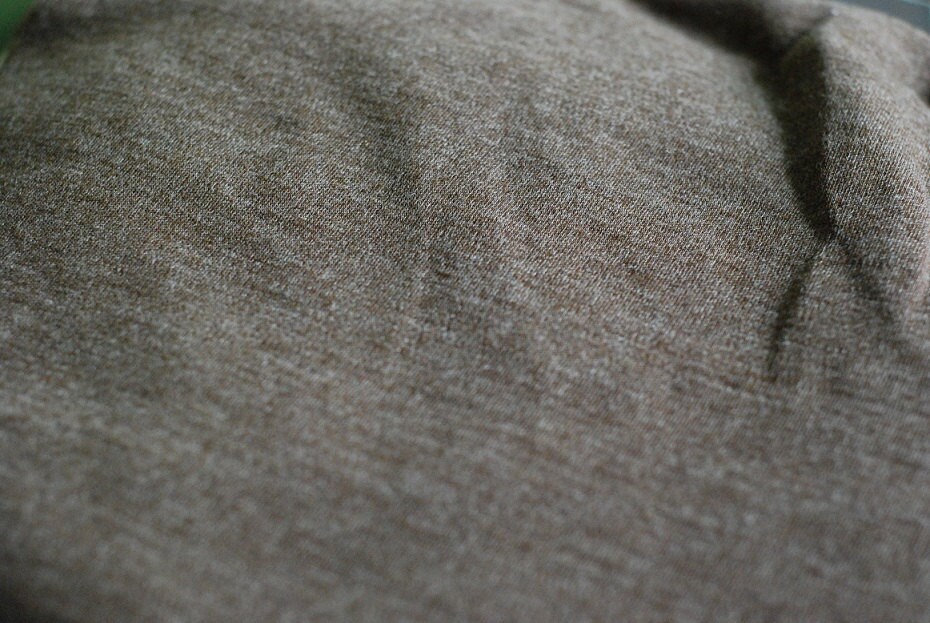 | ||
| Closeup of wool interlock fabric. Photo Credit: http://img0.etsystatic.com/000/0/5125962/il_fullxfull.345615636.jpg |
 |
| Longies made of wool interlock. Photo Credit: https://blogger.googleusercontent.com/img/b/R29vZ2xl/AVvXsEiHdpFRAqUZ-fkTX8MOr7KeP3zPi3-g2YJ4GmBbfHheq6NcZ1cMwa1QlAKRIpgrZGmz9pJn_S8O9fOnYr0PEeFatt76YBpuRGa9pCylWhQ2hd2emSOuG_B8-ICMrd3tBq1fYVPP1-67mhko/s1600/SB+Knit+longies.jpg |
Hand Knitted or Crocheted Items
This is exactly what it sounds like-items that are crocheted or knitted. These hold their value fairly well, though not as well as interlock. These will be less expensive than interlock due to lower materials cost, but more than upcycled because they take a long time to make (a pair of longies that fits the 6-12 month range takes about 12-14 hours to make on average). The absorption of these depends on several factors:
- Type of yarn or fiber used
- If the yarn or fiber is not 100% wool, it won't absorb well, period. Superwash wool might be a little easier to care for (it is treated with a chemical that causes it to not felt as easily in the wash, though it still will if you dry it!!) but that same chemical also causes it to not absorb as well. It still absorbs-just not as well as non-superwash wool.
- The weight or thickness of the yarn matters. Lighter weights (thinner yarn) means less total wool and if knit on needles too big, there can be a lot of holes which will again lead to lower absorbency. I've already explained that I like to use roving, because it is lightweight (as far as heaviness goes) but very absorptive, super soft, and sticks together well (giving you many of the benefits of felting without the disadvantages-see previous post if confused!); I can also "customize" how thick the garment is based on what you are going to use it for (and can use "thicker" bits of roving in the areas likely to get hit most often). Generally, the thicker/bulkier the yarn, the more absorption you will get.
- Size of needle used/size of stitches
- If the knitter or crocheter uses a large needle for the size of yarn they are working with, you will end up with large, loose stitches (and a project that is finished MUCH sooner!!)-however, this also means more "holes" between stitches, and again, less overall wool and therefore less absorption. You really want to not be able to see obvious holes between stitches when the garment is at rest. If you stretch ANY knitted fabric enough, you will be able to see some openings/gaps, but you don't want there to be any obvious opening or gapping when it is just sitting there. This is most important in the wet zone, obviously! It's not a big deal if the stitching is looser or the wool thinner in the legs of longies, and some people put lace ruffles or other fancy stitching around the bottom of the legs of longies-hopefully those don't have to be absorbing, so this is fine!
- I have been told that crocheted garments don't absorb quite as well as knitted garments. I have not personally tried crocheted ones, so I don't know this for a fact, but that is what some credible sources have told me. I think it has to do with the different type of stitching.
- Skill of the knitter/crocheter
- Obviously, unless you know the knitter/crocheter you are going to have to trust his/her word on how skilled and experienced he/she might be. You ideally want someone with a lot of experience in knitting and who has made clothing, not just flat items like blankets or washcloths.
- If you don't know the knitter/crocheter, you can look at the stitches to get an idea. If they are fairly even (in a row they look fairly uniform-they won't be perfect, but close to it), it's someone who knows what they are doing. If they are all over the place, probably not so much.
 | |
| Hopefully you can see that the stitches here are fairly uniform. Photo Credit: Jennifer Stone (mine). |
 |
| Versus the stitches here which are multiple sizes and tightnesses. Photo Credit: http://allkindsofknitting.files.wordpress.com/2013/01/dsc02438_2.jpg |
 |
| Example of hand knit longies (knit by me, using roving) |
Upcycled
This is by far your cheapest option when buying wool. Upcycled garments are the type that are made by a mama (or you!) purchasing wool sweaters (usually at least 75% wool-again here, 100% wool is better), felting them, and then sewing them into garments. Because you can usually find sweaters at thrift stores for not a ton of money, these will be WAY cheaper than either of the previous options (due to lower materials cost and not as much time to complete). They are always felted because otherwise the wool in the sweaters isn't likely to be thick enough to absorb. According to a local mama who makes ADORABLE upcycled garments, these hold up very well overnight and are easy to clean. The downside is that sometimes getting the fit right around legs and waists can be a bit difficult, and since these are usually heavily felted, there isn't a lot of stretch. They also look a little different (particularly the longies) which is neither good nor bad-just a matter of personal taste! These may not re-sell as well, simply because new ones are just not that expensive.
 | |||
| Upcycled wool longies. Photo Credit: http://www.etsy.com/listing/119326399/wool-longies-cloth-diaper-cover-soaker |
 |
| Upcycled wool shorties. Photo credit: http://www.etsy.com/listing/119326090/wool-whale-shorties-diaper-soaker |
Hopefully all that makes sense!! I will have more posts in the future on buying used, what to look for, etc. Let me know if there are specific topics you would like to see covered!
Type
of Wool
|
Cost
|
Ease
of Care
|
Resale
Value
|
Absorbency
|
Stretch
|
Appearance
|
Interlock
|
Most expensive-ranges from $35-70+ new
|
Pretty easy-wash every few weeks, lanolize after
every wash
|
Pretty good if well cared for
|
Excellent-can be customized depending on extra
layers and where
|
Depends on fabric-more if spandex is included.
|
Looks most like “regular pants” that you might buy
at a store
|
Knit
or crochet-
yarn
|
Mid-range-ranges from $25-45 new (sometimes
slightly more)
|
Pretty easy-wash every few weeks, lanolize after
every wash. Must take a little more care to prevent felting.
|
Fairly good if well cared for.
|
Very good depending on type of yarn used, skill of
knitter, and size of stitches.
|
Excellent unless it felts.
|
Shape is similar to regular pants, but the
stitching will make them look a little different-still very cute!!
|
Knit
or crochet-roving
|
Mid-range-ranges from $18-35 new (sometimes slightly
more)
|
Pretty easy-wash every few weeks, lanolize after
every wash. Must take a little more care to prevent felting.
|
Fairly good if well cared for.
|
Excellent-can be customized by adjusting the thicknesses
of roving used.
|
Excellent unless it felts.
|
Shape is similar to regular pants, but the stitching
will make them look a little different-still very cute!!
|
Upcycled
|
Lowest-ranges from $15-35 or a little more
depending on the sweater type (cashmere costs more etc)
|
Very easy! Already felted, so while you won’t want
to dry them (this can felt them even further) you don’t need to worry about
felting as much during washing.
|
Unknown
|
Excellent due to felting
|
Depends on the original sweater. Generally less stretch than other options, but best to ask the maker for details regarding stretch on your cover!
|
Shape is a little different for longies and
shorties-very cute though!!
|
