Showing posts with label Wool FAQ. Show all posts

Sunday, February 24, 2013

How to Measure for Woolies!

Regardless of if you want a lovely pair of custom woolies from my shop, are trying to buy a pair from your local diapering store or a website, or are looking to purchase used, you need to know how to measure your little one to get the best fit. If you are measuring for a custom pair, you will of course get a perfect fit-but if not, at least you can get a good fit! One thing to note: wool is quite stretchy, so it's generally not a great idea to add a whole lot to the measurements-if you do, you may find that you end up with a gorgeous pair of woolies that are too big for your little one! At most, I recommend adding 1/2-1 inch to the rise and 1 inch to the legs.
You Need:
An adorable baby and a measuring tape! The booger sucker is optional. All measurements should be done over a diaper, preferably the diaper or type of diaper you are likely to use with your woolies!
 

For All Wool Garments

Rise
Start at the baby's belly button, then pass the measuring tape down under their crotch

Hold the front of the measuring tape in place, then flip the baby over and bring it up to the top of the back of their diaper.
 Waist
This can be measured right at belly button level. Wrap the tape around, then read the number!
 Hips
Do this at the widest part of the baby's hips. Again, just wrap the tape around and then read!

For Longies (Pants)

You can measure leg length several ways. The 2 easiest are below. If your child is old enough, you can also take this measurement while he/she is standing. All should be measured from the diaper's crotch, not the very top of the legs, as most woolies have a gusset that allows extra room for the diaper and is not considered part of the leg length.
Measure your child lying down. Start at the crotch of the diaper and measure down as far as you want the legs to go. Note that most babies bend their knees, so make sure you account for that!

Or find a pair of pants that fits well and measure that from crotch to hem (note, I just grabbed a random pair of pants for this picture-these are too short for my son as you will notice if you look at the measurements! LOL)

For Shorties and Skirties

This is optional, but you may want to measure how long you would like your shorty/skirty to be. If so, you measure from the crotch again, but just stop at whatever point you want the garment to stop.

For Diaper Covers/Soakers

You are going to want to measure the thigh. I like to take this measurement just outside the leg openings of the diaper, since that's where you want the leg openings of your cover to be.
Just wrap around and read!

Side view!

And that's it! Pretty easy, right? Let me know if any of these don't make sense or you want more detailed photos!

Thursday, February 21, 2013

Fuzz Factor!

So any of you who have used wool for any length of time know that it tends to get a bit fuzzy. If you are new to wool but have been looking into it, you may have noticed the words "needs a shave" in the description for some used items. What is the deal with fuzz?
Well, here's the thing. Sheep's wool is intended as a weatherproof covering. It is designed to stick together and for the fibers to go in multiple directions to prevent the sheep from being impacted by crazy weather changes. Wool also has a good "memory" meaning that the fibers tend to always try to return to their original organization.
This is a photograph of what sheep's wool looks like right after it has been removed from the sheep. Notice the matted fibers (and the dirt! LOL!). This is actually a really good thing because it is part of what "waterproofs" the sheep (this is why sheep are not miserably wet and cold even when standing in the rain). Now, when wool is being prepared to be made into clothing, it goes through a process:
First, it gets carded by hand or machine. Carding is basically running the wool between 2 big brushes to make the fibers lay in the same direction (more or less).
Once it has been carded, the wool looks like this. Notice how the fibers are all more or less in a straight line now.
Then the fun part-it gets dyed into gorgeous colors! Now it is called roving.
Once you get to the roving stage you can either spin it into yarn OR just knit the roving.
Now, this  characteristic of wool is actually one of the major things that makes it most suitable for diapering! The more the fibers stick together, the more absorbent the diaper cover is, because the fibers will fill in the "holes" that are created with knitting. I typically knit out of roving instead of yarn because this makes the cover more absorbent and "leak proof." However, it also makes it slightly "fuzzier" in appearance as a new cover. A cover knit from yarn will have less initial fuzz, but also more holes and thus a bit less absorbency/will leak sooner. So it kind of depends on what you are wanting! If you are ordering from me, if you prefer yarn over roving, please tell me-I am more than happy to do either!
One thing to know about wool though, is that because of the "memory" that I talked about earlier, ALL items that are made out of wool will fuzz eventually. The more wool content, the more tendency to create that fuzzy effect. Because diapering wool is usually at least 75% wool (preferably 100%), the "fuzz factor" is high! So even items made of wool yarn will eventually look fuzzy (though they will probably nto start out looking that way-that completely depends on the yarn used). The other thing to know, especially if you are considering buying used, is that the fuzz does not show up well in photographs. You kind of have to take an out-of-focus, oddly angled photograph to capture it. I tried to do that this morning so you could kind of see....
This is what a pair of woolies made from roving looks like from a "top shot"

The same pair from that weird side angle-you can probably see the mild fuzz. This is probably a typical amount for the type of roving I usually work with. Of note, these have not been lanolized. The lanolization process does decrease the fuzz.

This is my store bought sweater that is 20% wool. I've worn it about 15 times total, I think. You can see the fuzz forming on the bottom, and this sweater was machine knitted from yarn made of 80% cotton and 20% wool.

This is the fuzziest/"worst" roving I have ever worked with, so this is about as bad as you can expect it to get.

This is the leg of a pair of overalls I am working on, knitted from yarn. So you can tell that even yarn can end up pretty fuzzy!

Hopefully those images give you a bit of an idea of what to expect!
Now, I am personally not bothered by a slight bit of fuzziness. To me, it just lends a "soft" look to my baby's woolly bottom, which is okay with me. However, you do have some options if you just hate the fuzzy look-aka shaving your garments (so when you see the phrase "needs a shave" that means the garment has become fuzzy). Please note-no matter what wool fiber (yarn, interlock, roving) your garments are made from, if you want to keep them looking "sharp" and completely not fuzzy, you will have to do this process on a regular basis.
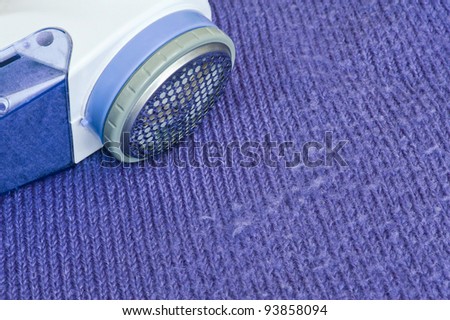
The way a wool shaver works is exactly the same as the way an electric shaver works for a person. It runs over the top and "cuts" the fibers close to the smooth surface of the fabric while vacuuming the cut fibers into a little container. I have not personally used wool shavers, so I cannot give you a review on different brands or suitability for use. I can tell you that I would not recommend using one that looks like this:
The reason is that these types of shavers are intended to pull the errant fibers out instead of clipping them close to the source, and by doing so, you are likely to eventually cause your wool garments to unravel. The good ones look more like this:

This one is being used on a 50% wool sweater (machine knit out of yarn)-you can see the difference between the shaved fibers on the left and the unshaved fibers on the right.
If you are going to purchase a wool shaver, I would recommend that you read lots of reviews first! The thing I would worry most about is the fibers getting caught in the shaver and pulling, potentially creating a hole. I have friends who have told me that this has happened to their sweaters. Even better, if you know of a friend who has a shaver and likes it-go with their brand!
Shavers are pretty easy to use-you just run it over the garment in question!
Hopefully this was helpful-as always, let me know if something was unclear or could use more information!

Thursday, January 24, 2013

Wool vs Fleece

A question I frequently see on message boards and/or am asked is "What is the difference between wool and fleece longies?" Well, there are several key differences (it's sort of like asking "what's the difference between pocket diapers and all-in-ones). As with anything cloth diapering related (or perhaps anything in life!), which one you choose is going to be a personal decision where you have to weigh your own values and what is most important to you in your cloth diapering journey! For some, it will be cost, for others, it will be durability, for others it will be ease of use, and yet others may feel strongly about natural vs synthetic fibers. At the end of the day, I just want to shed some light so you understand the differences and can figure out what is best for your family! Here goes...
What They Do
Both wool and fleece are typically used as moisture barriers, and often they are used as extra moisture barriers for heavy wetters. They can be just used on their own-neither requires a diaper with PUL underneath. Both require a diaper of some type (fitted, prefold, leaky pocket, etc.) but said diaper does not need to be waterproof on its own. Both of them can either be used as a cover and clothing in one (longies/shorties) or as a typical cover with clothing over the top.
How They Look
Both can be heartstoppingly cute, especially on a baby's cute little tushy! Both are available in all kinds of colors. Fleece is more likely to be available in a pattern and looks like fabric (you know what fleece looks like-you probably have a pair of fleece pants yourself!). Wool can look like fabric or not, depending on what type you get.
How They Work
Have you ever noticed that if you spill a liquid on fleece, it doesn't soak in, but rather beads up? Eventually, if it sits there long enough, it will soak in, but it doesn't right away and you can sort of brush it off. Well, fleece is a manmade/synthetic fiber and a bit of liquid-repelling is in its nature. Fleece covers take advantage of this property and hold the moisture on the inside (side of the baby's skin) when treated appropriately (more on this later).
Wool is a natural fiber (from sheep, usually, although you can also use alpaca and other fibers-but it's usually sheep's wool as this is the least expensive) which tends to absorb moisture (and can absorb a LOT of moisture before feeling wet!). So wool holds the urine away from the side of the baby's skin instead of against it.
The end result from either is dry sheets! They just use 2 different routes to get there.
Use and Care
Fleece needs to be washed after every use/diaper change.
Wool is washed about once every 4-8 weeks (depends on how you are using it) unless it gets poop on it.
Fleece can be washed with your regular laundry in the machine.
Wool needs to be either hand washed or washed VERY carefully by itself (instructions here)
You need to treat fleece with fabric softener every time you wash it. This helps enhance the fluid repulsion and makes for a better diaper cover.
Wool needs to be treated with lanolin (a natural oil which sheep produce-this oil helps the wool absorb more and also is what makes wool covers self cleaning as long as they are just wet) each time you wash it.
Cost
Wool is going to be a lot more expensive than fleece. Fleece is manmade from plastic, essentially, and so it is cheap and readily available-you can even find lots of cute prints in the remnants section of any store, most likely, that will work for your little one (because you don't need much fabric)! Wool, on the other hand, has to grow on an animal, get removed from that animal, and then get processed (I will probably do a post on this later as it's kind of cool) and dyed, etc. before being made into your garment. However, since you have to wash fleece each time it is used and wool only every few weeks, you could get away with 2-3 wool covers vs dozens of fleece covers (if you were using ONLY wool or fleece covers) and you would also generate a lot less laundry. Thus, it somewhat depends on how you are going to use them!
DIY-Friendliness
If you have a sewing machine and a basic pattern along with a basic sewing skill set, you can make fleece longies and shorties. Soakers are a little trickier, but still doable with some practice. Total time to complete a pair is probably in the 1-2 hour range.
If you are an experienced knitter, you can probably make your own longies, shorties, and covers! There are free patterns available for personal use on the internet. However, if your knitting experience is limited to dishrags and scarves, I don't necessarily recommend trying to make an article of clothing next. It may be frustrating! I am a very experienced knitter (of clothing as well as other items) and it takes me about 10 hours to make a soaker, 12 to make shorties, and 15 or more to make longies. Obviously, that will vary depending on the size of the article in question!
Baby Comfort
Some children are allergic to the synthetic fibers in fleece (or fabric softener!) so make sure you know if your child is okay with having fleece next to their skin before investing much in a bunch of fleece articles! If your child has skin issues with microfiber or other synthetic fibers in their diapers, fleece may not be your best route.
A very few people are allergic to lanolin. If your child tends to break out if you apply lotions, I'd stay away from wool. Some families note that they tend to get itchy with wool. If this is the case for your family, make sure your wool articles are made from a super soft wool such as merino, cashmere, or angora (though angora would be extremely expensive!).
In the summer, fleece may be too hot for your little ones. Fleece works by trapping heat against the body-this is why it is SO warm and lovely/cozy in the winter. This is just a characteristic of this type of fabric and cannot be changed.
Wool, on the other hand, is a natural fiber (basically sheep's hair) and breathes. This means that instead of trapping heat against the body, wool does not transfer heat. It keeps the skin at whatever temperature it was at prior to the garment being put on. This makes it VERY warm and cozy in the winter, but light and cool in the summer. Generally, hand knitted items will breathe a little better than interlock or upcycled.
Any Questions?
As always, feel free to comment or contact me if you have any questions or something isn't clear!

Tuesday, January 22, 2013

Wool Basics-Drying Wool and Sizing Issues

I know, for some of you who are experienced wool users, this post will probably seem a bit elementary. That's okay-you can skip it. ;-) For those who are new to wool, there are a few things that you should know which will make your life easier and hopefully prevent any harm from coming to your gorgeous new woolies! As always, if any of this is unclear. let me know and I will clarify!
Heat will make wool shrink/felt. The higher the heat, the worse the shrinkage. Therefore, do NOT put your wool in the dryer (unless your goal is to felt it), and it is also not a good idea to lay your wool garment over a heat register to dry. While this won't cause as drastic of changes, it will do damage over time. If you are in a hurry for your wool to dry, you can put a fan on it, and the moving air should help.
Water/liquid makes wool heavy! I know you have all seen photos of woolies hanging adorably on clotheslines, but this is really not a great idea either. The reason is that the weight of the water will pull down against the clothespins and cause your garments to stretch. Wool does have good "memory" (meaning it will tend to return to its original shape and size unless you interfere with it), but over time this will stress the fibers and cause wear and tear (and holes!) to happen more quickly. The best way to dry wool is to lay it flat, preferably on an aerated surface, with as much support as possible. Ways you can do this are: use the top "row" of a drying rack (this is generally what I do), string cheesecloth or another aerated but supportive fabric (with lots of holes) out and lay it on top of that, or just lay it flat and go flip it every once in a while.
Making your wool dry faster: The more surfaces exposed, the faster it dries (so it will be slower if you have it flat on a countertop, etc. versus something that is aerated). You can use the sun, but watch for signs of fading (depending on the person who dyed the wool-some dye jobs hold up to the sun very well, others do not, so this is going to be an experimental thing). You can blow a regular fan on them; no hair dryer (unless you use the no heat setting) or heat register though! Really, the best way to make your wool dry as quickly as possible is to squeeze as much water out as possible (using the towel squeeze or towel roll method-more than once if necessary!) prior to laying it out to dry.
What if I accidentally shrunk my wool?
All is not lost, as long as the shrinkage and felting are minimal. Get your garment completely wet (soaked), then gently stretch it out to its previous size and either pin it there or use something heavy to hold it there. Hopefully, when it is dry, it will retain this size and shape.
Can I stretch my wool?
All wool has some inherent stretch to it! Hopefully your garment will stretch as much as you need it to just with normal wear. If you want to try to increase the size of the overall garment, you can try-just be aware, there will be some limitations and you may end up damaging your wool. It's up to you whether that is a chance you want to take! You can either use the method above to stretch it, or you can stretch your garment out and then block it (blocking is when you use a steam iron which is hovering just BARELY above the surface of the garment-this will help the fibers relax).

Wednesday, January 16, 2013

Help! I Have Too Many Options! (AKA Which Wool Do I Want?)


I like to compare the time when you first start looking into wool to the time you first start thinking about cloth diapering-there are SO many types, and brands, and then people start talking in a foreign language, asking you about things like “felting” and “interlock”-and all you know is that you want the best value for your money, and you want something (preferably something cute/beautiful) to keep your precious little one dry! So the purpose of this post is to compare and contrast (in a very basic way-later posts can go into more detail of each type of wool soaker if there is interest-let me know!) the various types of wool so that you can make the right choice for your family. I am going to summarize each type of wool, and then include (probably at the bottom) a "quick and easy" reference chart. Please note that what I say in this blog post is based on my own experience, research, and discussions with my husband (grew up spinning and processing wool) and his mother (a fiber artist with her own studio who works primarily with wool for spinning, felting, knitting, dying, etc.)-I definitely welcome input and stories/experiences from others! And if there is anyone who makes a type of wool that they would like me to try out, review, etc. I welcome the opportunity to do that. Also, if anything is unclear, please feel free to contact me or just comment on the blog post!

Types of Wool

Interlock

Interlock wool is wool that has been machine knitted and has at least 2 layers (you can get it with more)-or in some cases, it has been woven on a loom (machine or hand). There are 2 types of interlock wool-one has a very small amount of spandex (or something similar) integrated into it and the other is 100% wool. The advantage of some spandex is that over time, it is less likely that the wool will lose its shape and it gives the wool a little more stretch/rebound versus the 100% wool. The disadvantage is that you have introduced another fiber type-so it might absorb a little less. Because interlock is almost always machine made, the stitches are VERY tiny and it is very absorptive. Items made from this type of wool usually look like "regular clothes" that you might buy at a store. A nice thing about interlock is that usually items made with interlock can have multiple thin layers (sometimes throughout the whole thing, sometimes just sewn into the "diaper zone"), so some people feel they are more absorptive. The downside-interlock is VERY expensive (even if you buy it yourself and then sew your items yourself)-sometimes up to $30/yard!!! It does last pretty well, and holds its resale value well. Like any machine made item, it is a little less delicate, but it will still felt if not cared for according to instructions!
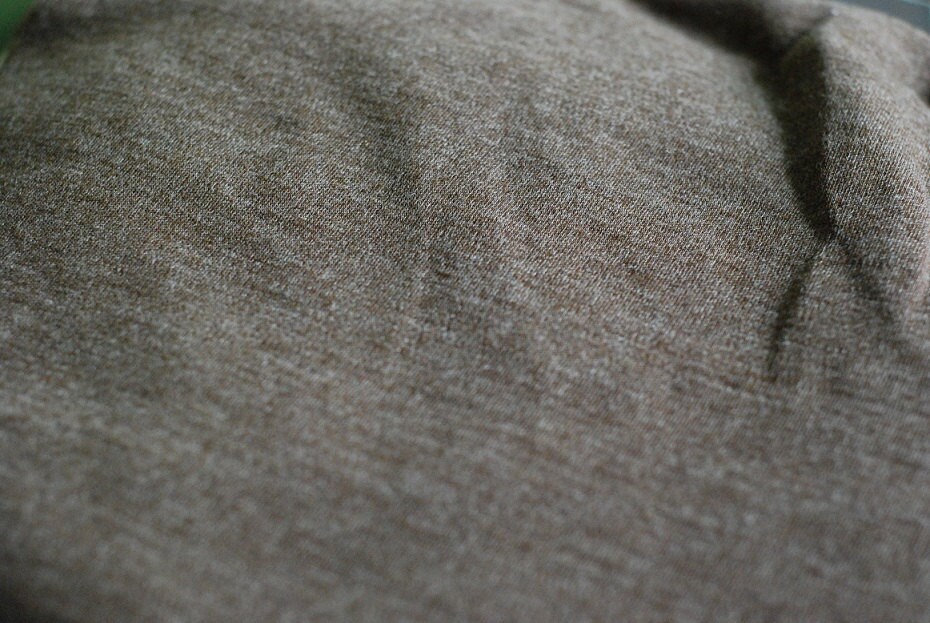
Closeup of wool interlock fabric. Photo Credit: http://img0.etsystatic.com/000/0/5125962/il_fullxfull.345615636.jpg

Longies made of wool interlock. Photo Credit: https://blogger.googleusercontent.com/img/b/R29vZ2xl/AVvXsEiHdpFRAqUZ-fkTX8MOr7KeP3zPi3-g2YJ4GmBbfHheq6NcZ1cMwa1QlAKRIpgrZGmz9pJn_S8O9fOnYr0PEeFatt76YBpuRGa9pCylWhQ2hd2emSOuG_B8-ICMrd3tBq1fYVPP1-67mhko/s1600/SB+Knit+longies.jpg

 Hand Knitted or Crocheted Items

This is exactly what it sounds like-items that are crocheted or knitted. These hold their value fairly well, though not as well as interlock. These will be less expensive than interlock due to lower materials cost, but more than upcycled because they take a long time to make (a pair of longies that fits the 6-12 month range takes about 12-14 hours to make on average). The absorption of these depends on several factors:
  1. Type of yarn or fiber used
    1. If the yarn or fiber is not 100% wool, it won't absorb well, period. Superwash wool might be a little easier to care for (it is treated with a chemical that causes it to not felt as easily in the wash, though it still will if you dry it!!) but that same chemical also causes it to not absorb as well. It still absorbs-just not as well as non-superwash wool.
    2. The weight or thickness of the yarn matters. Lighter weights (thinner yarn) means less total wool and if knit on needles too big, there can be a lot of holes which will again lead to lower absorbency. I've already explained that I like to use roving, because it is lightweight (as far as heaviness goes) but very absorptive, super soft, and sticks together well (giving you many of the benefits of felting without the disadvantages-see previous post if confused!); I can also "customize" how thick the garment is based on what you are going to use it for (and can use "thicker" bits of roving in the areas likely to get hit most often). Generally, the thicker/bulkier the yarn, the more absorption you will get.
  2. Size of needle used/size of stitches
    1. If the knitter or crocheter uses a large needle for the size of yarn they are working with, you will end up with large, loose stitches (and a project that is finished MUCH sooner!!)-however, this also means more "holes" between stitches, and again, less overall wool and therefore less absorption. You really want to not be able to see obvious holes between stitches when the garment is at rest. If you stretch ANY knitted fabric enough, you will be able to see some openings/gaps, but you don't want there to be any obvious opening or gapping when it is just sitting there. This is most important in the wet zone, obviously! It's not a big deal if the stitching is looser or the wool thinner in the legs of longies, and some people put lace ruffles or other fancy stitching around the bottom of the legs of longies-hopefully those don't have to be absorbing, so this is fine!
  3. I have been told that crocheted garments don't absorb quite as well as knitted garments. I have not personally tried crocheted ones, so I don't know this for a fact, but that is what some credible sources have told me. I think it has to do with the different type of stitching.
  4. Skill of the knitter/crocheter
    1. Obviously, unless you know the knitter/crocheter you are going to have to trust his/her word on how skilled and experienced he/she might be. You ideally want someone with a lot of experience in knitting and who has made clothing, not just flat items like blankets or washcloths. 
    2. If you don't know the knitter/crocheter, you can look at the stitches to get an idea. If they are fairly even (in a row they look fairly uniform-they won't be perfect, but close to it), it's someone who knows what they are doing. If they are all over the place, probably not so much.
 Hopefully you can see that the stitches here are fairly uniform. Photo Credit: Jennifer Stone (mine).
Versus the stitches here which are multiple sizes and tightnesses. Photo Credit: http://allkindsofknitting.files.wordpress.com/2013/01/dsc02438_2.jpg
Example of hand knit longies (knit by me, using roving)


Upcycled

This is by far your cheapest option when buying wool. Upcycled garments are the type that are made by a mama (or you!) purchasing wool sweaters (usually at least 75% wool-again here, 100% wool is better), felting them, and then sewing them into garments. Because you can usually find sweaters at thrift stores for not a ton of money, these will be WAY cheaper than either of the previous options (due to lower materials cost and not as much time to complete). They are always felted because otherwise the wool in the sweaters isn't likely to be thick enough to absorb. According to a local mama who makes ADORABLE upcycled garments, these hold up very well overnight and are easy to clean. The downside is that sometimes getting the fit right around legs and waists can be a bit difficult, and since these are usually heavily felted, there isn't a lot of stretch. They also look a little different (particularly the longies) which is neither good nor bad-just a matter of personal taste! These may not re-sell as well, simply because new ones are just not that expensive. 
Upcycled wool longies. Photo Credit: http://www.etsy.com/listing/119326399/wool-longies-cloth-diaper-cover-soaker


Upcycled wool shorties. Photo credit: http://www.etsy.com/listing/119326090/wool-whale-shorties-diaper-soaker

Hopefully all that makes sense!! I will have more posts in the future on buying used, what to look for, etc. Let me know if there are specific topics you would like to see covered!


Type of Wool
Cost
Ease of Care
Resale Value
Absorbency
Stretch
Appearance
Interlock
Most expensive-ranges from $35-70+ new
Pretty easy-wash every few weeks, lanolize after every wash
Pretty good if well cared for
Excellent-can be customized depending on extra layers and where
Depends on fabric-more if spandex is included.
Looks most like “regular pants” that you might buy at a store
Knit or crochet-
yarn
Mid-range-ranges from $25-45 new (sometimes slightly more)
Pretty easy-wash every few weeks, lanolize after every wash. Must take a little more care to prevent felting.
Fairly good if well cared for.
Very good depending on type of yarn used, skill of knitter, and size of stitches.
Excellent unless it felts.
Shape is similar to regular pants, but the stitching will make them look a little different-still very cute!!
Knit or crochet-roving
Mid-range-ranges from $18-35 new (sometimes slightly more)
Pretty easy-wash every few weeks, lanolize after every wash. Must take a little more care to prevent felting.
Fairly good if well cared for.
Excellent-can be customized by adjusting the thicknesses of roving used.
Excellent unless it felts.
Shape is similar to regular pants, but the stitching will make them look a little different-still very cute!!
Upcycled
Lowest-ranges from $15-35 or a little more depending on the sweater type (cashmere costs more etc)
Very easy! Already felted, so while you won’t want to dry them (this can felt them even further) you don’t need to worry about felting as much during washing.
Unknown
Excellent due to felting
Depends on the original sweater. Generally less stretch than other options, but best to ask the maker for details regarding stretch on your cover!
Shape is a little different for longies and shorties-very cute though!!